

Cart
0
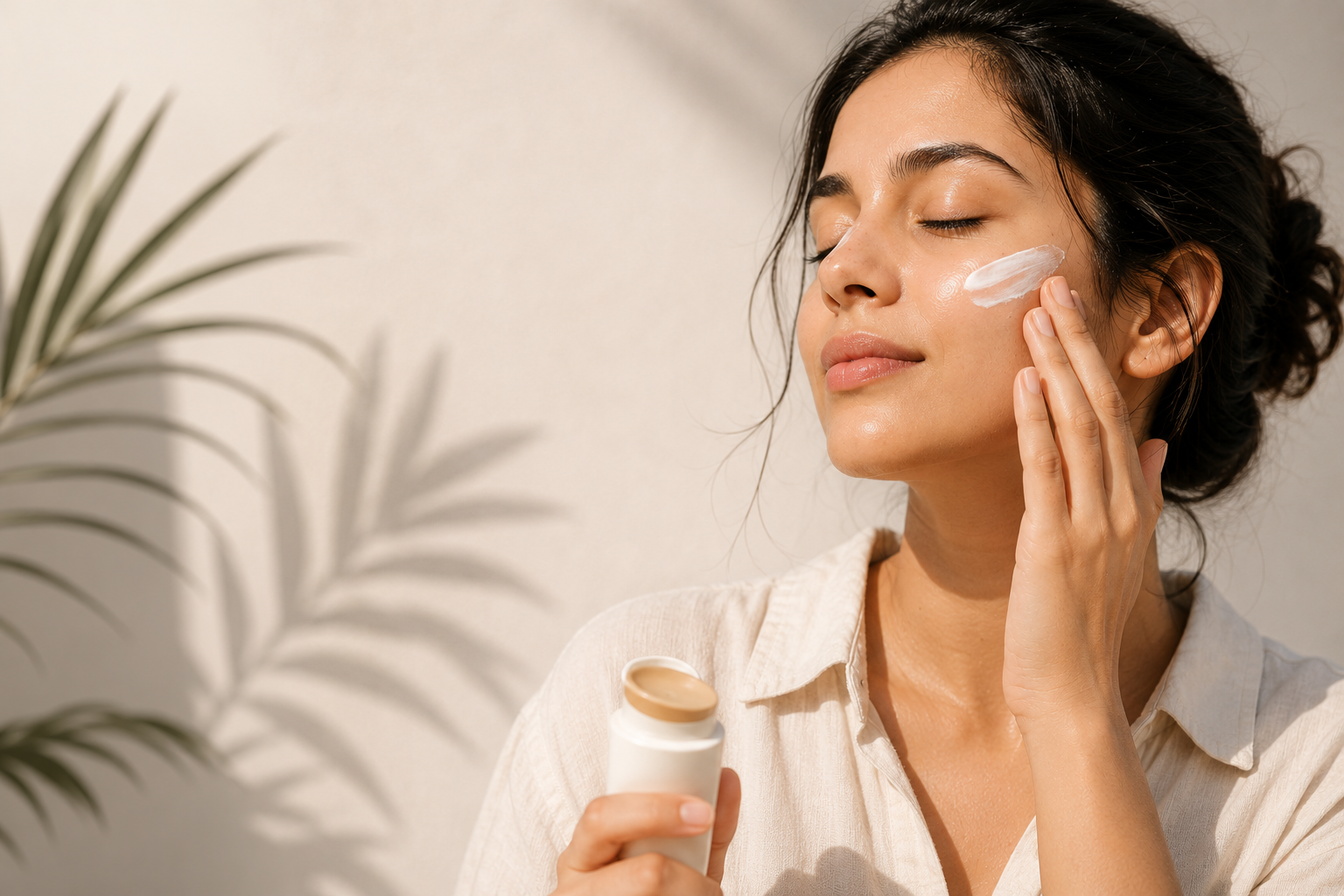
Most people have gotten the memo on wearing sunscreen daily. Far fewer actually reapply it, and in Pakistan's climate — with intense year-round UV exposure, long daylight hours in summer, and heat that accelerates sweat and sebum production — that gap between applying once and reapplying properly is doing more damage than most people realise.
Why One Application Isn't Enough
Sunscreen's protective filters degrade with UV exposure over time, regardless of formula quality. Most dermatological guidance recommends reapplication every two hours during active sun exposure, and this isn't overly cautious advice — it reflects how quickly filter degradation actually happens under real sun exposure, not indoor, incidental light.
In Pakistan specifically, the combination of high UV index for most of the year, extended daylight hours in summer, and heat-driven sweating (which physically removes sunscreen from the skin surface) means a single morning application is often providing meaningful protection for only a fraction of the day it's meant to cover, particularly for anyone outdoors, commuting, or near windows for extended periods.
The Real Reason People Skip Reapplication
It's rarely about not knowing reapplication matters — it's about the practical difficulty of reapplying sunscreen over makeup without disrupting it, or the inconvenience of stopping to apply cream-based sunscreen through the day. This is a real, valid obstacle, not laziness, and the solution isn't willpower — it's using the right format for reapplication rather than trying to force a morning routine product into a midday reapplication role it wasn't designed for.
How to Actually Reapply Without Disrupting Makeup
Cream and lotion sunscreens work well for the initial morning application but are genuinely impractical for reapplying over makeup. For midday reapplication, mineral powder sunscreens, setting-spray-format SPF, or sunscreen sticks are far more practical — they layer over makeup without disturbing it, dry quickly, and can be applied in seconds rather than requiring a full skincare-step pause.
For areas most exposed and most commonly missed — the under-eye area, hairline, ears, and neck — a targeted approach matters, since these zones are thin-skinned and particularly vulnerable to cumulative UV damage over time. This connects directly to something we've covered before: pigmentation-related dark circles are directly worsened by unprotected sun exposure in this specific area, which is one of the most commonly skipped zones during both initial application and reapplication.
Why This Matters More If You're Using Active Ingredients
If your routine includes exfoliants, retinoids, or vitamin C — all of which increase photosensitivity — inconsistent sun protection doesn't just fail to protect skin, it actively undoes the benefits those actives are meant to provide. This is particularly relevant if you're following a structured approach like skin cycling, where active nights increase sun sensitivity the following day, making consistent SPF reapplication non-negotiable rather than optional on those days specifically.
The same applies to anyone actively treating hyperpigmentation. Brightening actives work by reducing existing pigment, but unprotected sun exposure continues stimulating new pigment production, meaning inconsistent SPF can genuinely cancel out weeks of consistent treatment with a product like a dark spot corrector serum.
A Practical Reapplication Schedule
For most people with regular outdoor exposure through the day, a realistic schedule looks like: morning application as the last skincare step before makeup or leaving the house, a midday reapplication (powder or spray format) around early afternoon, and a final reapplication in late afternoon if still outdoors or near significant window exposure. Indoor-only days with minimal window exposure need less frequent reapplication, though morning application still matters given how much incidental UV exposure happens even during a normal commute or errands.
Common Reapplication Mistakes
Using too little product is one of the most common issues — most people apply roughly half the amount needed for the SPF rating on the label to actually hold true, which means even consistent reapplication under-delivers if the amount applied each time is too thin. Forgetting ears, neck, and hands is another common gap, since these areas are exposed just as much as the face but rarely get the same attention. And treating reapplication as optional on cloudy or cooler days is a mistake, since UV exposure isn't the same as visible heat or brightness — UV rays penetrate cloud cover significantly more than people assume.
The Bottom Line
In a climate like Pakistan's, a single morning sunscreen application is doing a fraction of the job it's meant to do. Reapplication doesn't have to disrupt your day or your makeup if you're using the right format for it — powder, spray, or stick rather than trying to force a cream reapplication over a full face of makeup. This one adjustment, more than almost any other skincare change, has an outsized impact on preventing new pigmentation, protecting active-ingredient results, and slowing visible skin ageing over time.


