

Cart
0
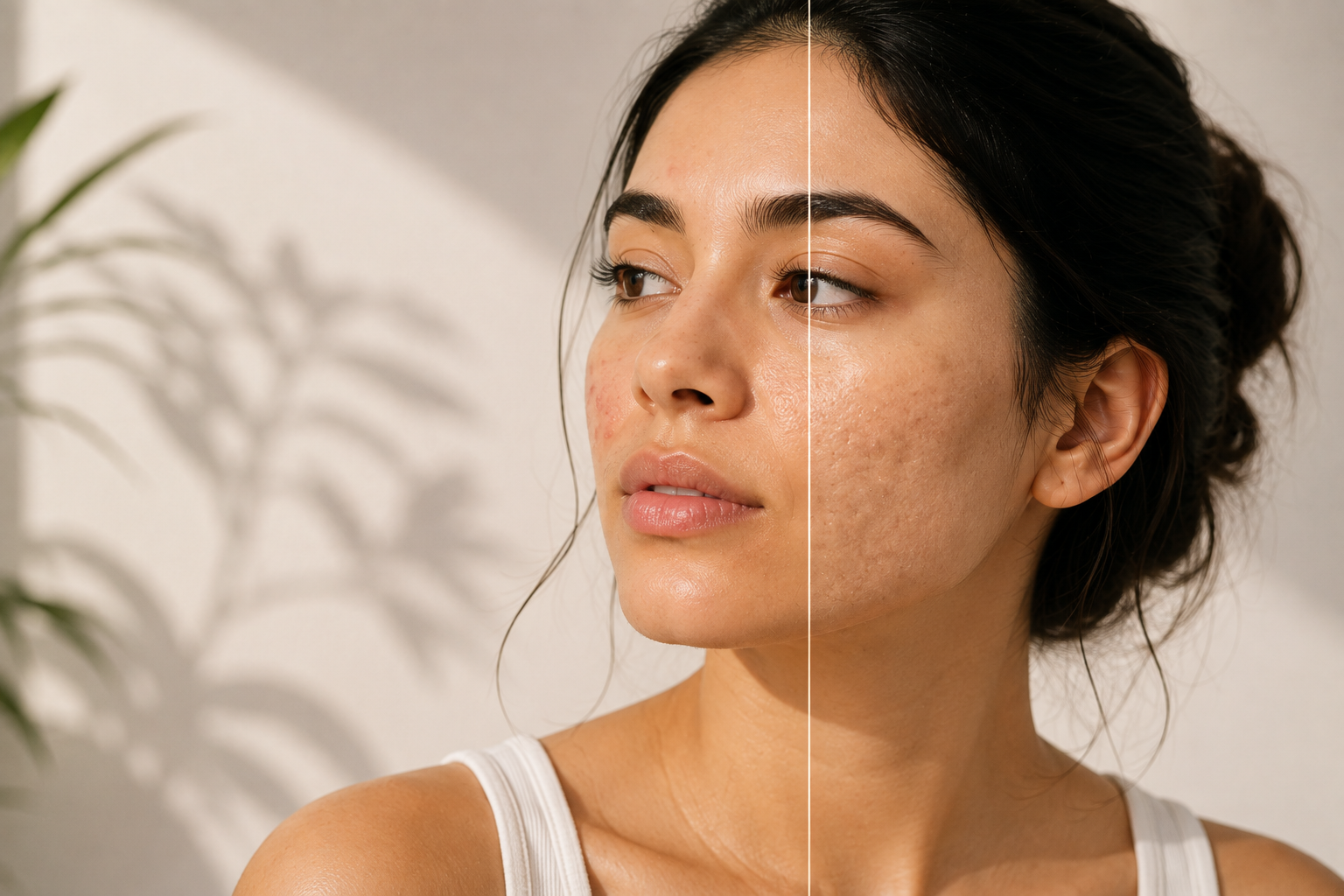
One of the most common skincare mistakes isn't using the wrong products — it's using the right products for the wrong problem. Acne scarring and active breakouts often get treated as the same issue because they show up on the same face, sometimes at the same time, but they require genuinely different approaches, and conflating them is why so many routines end up fighting themselves.
Why These Are Fundamentally Different Problems
Active breakouts are an inflammatory, ongoing process — clogged pores, bacterial activity, and inflammation happening in real time. The goal here is to reduce inflammation, control the bacteria and oil driving the breakout, and prevent new congestion from forming.
Acne scarring, including post-inflammatory hyperpigmentation (the dark or red marks left after a breakout heals), is a completely different situation. The active inflammation is over; what's left is either excess pigment production in the skin (hyperpigmentation) or, in more severe cases, actual textural changes from collagen damage during the healing process. Treating this requires addressing pigment and, where relevant, collagen remodelling — not fighting active inflammation that isn't there anymore.
Why Using One Approach for Both Backfires
People dealing with both active breakouts and old scarring often make one of two mistakes. The first is treating everything like active acne — using harsh, drying anti-acne products across the whole face, including areas with old scarring that don't need that kind of aggressive treatment. This can actually worsen the appearance of dark marks, since excessive irritation triggers more inflammation and, in turn, more post-inflammatory pigmentation.
The second mistake is the opposite: using brightening products across active breakout areas without addressing the actual inflammation driving new breakouts, which means new marks keep forming as fast as old ones fade, creating a cycle that never resolves.
How to Actually Run Both Routines at Once
For Active Breakouts
Focus on gentle but effective oil control and anti-bacterial action, without over-stripping the skin. A dedicated anti-acne face wash used consistently, combined with lightweight, non-comedogenic hydration, addresses active congestion without the harshness that worsens inflammation and, downstream, worsens scarring risk. This is genuinely the priority step — you can't effectively treat scarring while new breakouts are actively forming and adding to it.
For Existing Scarring and Dark Spots
This is where targeted brightening actives matter. A dedicated dark spot corrector serum focused on inhibiting excess melanin production works specifically on the pigment left behind, applied to scarred areas without needing to be applied across zones that are still actively breaking out. If you're deciding between vitamin C and niacinamide for this step, our full breakdown of the two ingredients covers which one fits your specific situation.
For Textural Scarring (Not Just Discolouration)
If scarring has left actual texture changes — not just pigment, but shallow indentations from collagen damage — regenerative ingredients like PDRN and copper peptides become relevant, since these work on structural collagen rebuilding rather than surface pigment alone. This is a slower process than treating discolouration and typically requires consistent use over several months to show meaningful textural improvement.
The Practical Routine Structure
Run both simultaneously rather than sequentially — waiting until breakouts fully clear before starting on scarring means old marks sit untreated for months longer than necessary. Use anti-acne treatment specifically on active breakout zones, and brightening or regenerative treatment on scarred, non-active zones, adjusting as breakouts clear and new areas of scarring (or lack thereof) become clear.
Patience matters differently for each. Active breakouts typically respond within two to four weeks of consistent treatment. Pigmentation from old scarring takes six to twelve weeks minimum, and textural scarring can take several months, since you're working with actual tissue remodelling rather than surface-level correction.
The Bottom Line
Active breakouts and old acne scarring are two different problems that happen to share the same face, and treating them identically is why so many routines feel like they're stuck in place — clearing breakouts while marks pile up, or fading marks while new breakouts keep appearing. Running a dual approach, matched to what's actually happening in each area, is what actually breaks the cycle.


