
Cart
0
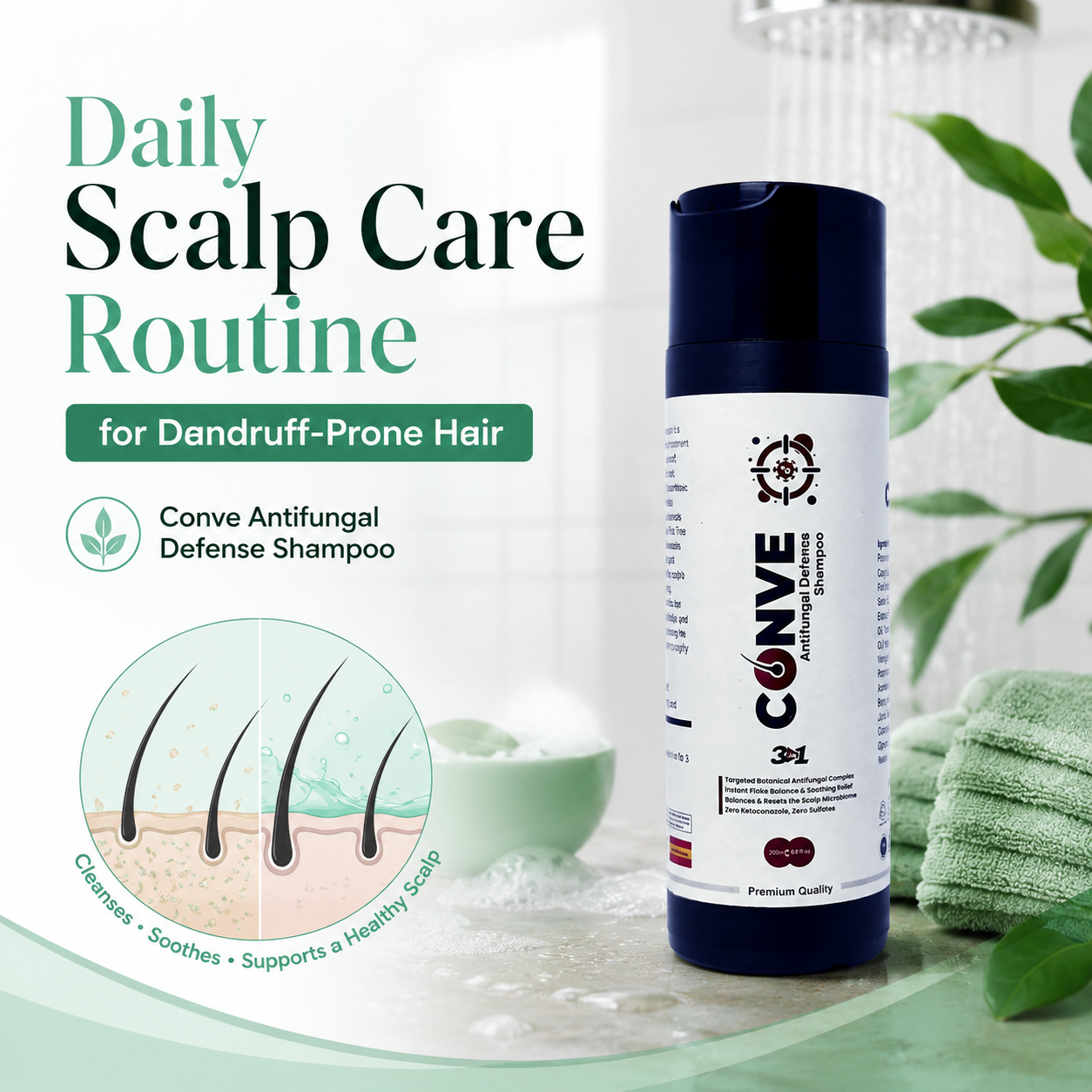
A good dandruff-prone scalp routine should be simple enough to follow consistently. The goal is to reduce surface buildup and visible flakes while avoiding habits that make the scalp feel more irritated.
1. Wash according to scalp oiliness
There is no single wash schedule for everyone. Oily scalps may need more frequent cleansing, while drier scalps may prefer more spacing between washes. Let visible buildup, oiliness and comfort guide frequency.
2. Use Conve on the scalp
Conve Antifungal Defense Shampoo is a sulphate-free scalp cleanser designed for dandruff-prone, flaky, itchy and oily scalps. Wet the hair thoroughly, apply to the scalp and massage gently to form lather.
3. Leave it on for 3–5 minutes
Instead of rinsing immediately, allow the shampoo to remain on the scalp for the recommended 3–5 minutes, then rinse thoroughly. Avoid scratching with your nails during washing.
4. Keep conditioner on the lengths
If your scalp becomes oily or congested easily, concentrate conditioner on the mid-lengths and ends unless the product is specifically designed for scalp use. This can help reduce unnecessary residue around the roots.
5. Clean tools and pillowcases
Brushes, combs, hats and pillowcases can collect oil and styling residue. Keeping frequently used items clean supports a more consistent scalp-hygiene routine.
6. Avoid piling on heavy scalp products
Too many oils, waxes or styling products can make buildup harder to manage. If you use them, keep the amount moderate and cleanse thoroughly on wash days.
7. Watch for warning signs
Persistent severe itching, redness, sores, thick scaling or sudden hair loss deserves professional assessment. A dermatologist can help distinguish ordinary dandruff-prone scalp concerns from conditions that need medical treatment.
Consistency is the most important part of a practical routine: cleanse the scalp correctly, rinse well, avoid aggressive scratching and adjust wash frequency based on your scalp's response.
Conve formula and price in Pakistan
Conve highlights Piroctone Olamine and Climbazole alongside Tea Tree, Neem, Willow Bark, Apple Cider Vinegar and ferments in a sulphate-free shampoo. Its distinction is this combined formulation, not an exclusive claim to the two anti-dandruff ingredients. Active concentrations are not disclosed in the information available here; do not assume a percentage or equivalence to a medicinal shampoo.
Check the current Conve shampoo price and availability on the official product page. Botanical oils can irritate some scalps, and sulphate-free does not automatically mean fragrance-free, salt-free or suitable for every sensitive scalp.
Directions and treated-hair care
Follow the current pack for application time and frequency. Existing directions describe 3–5 minutes of scalp contact; confirm this against the pack and rinse thoroughly. Apply conditioner to the lengths if needed. Confirm compatibility with your stylist after colour or keratin treatment.
Conve or EvaGrow?
Conve focuses on visible flakes, oily buildup and dandruff-prone scalp cleansing. EvaGrow focuses on sulphate-free cleansing with hair-support and scalp-care ingredients. Neither formula should be selected as a guaranteed hair-regrowth treatment.
Read the anti-dandruff shampoo buying guide, itchy, flaky scalp guide and scalp-care routine.


