

Cart
0
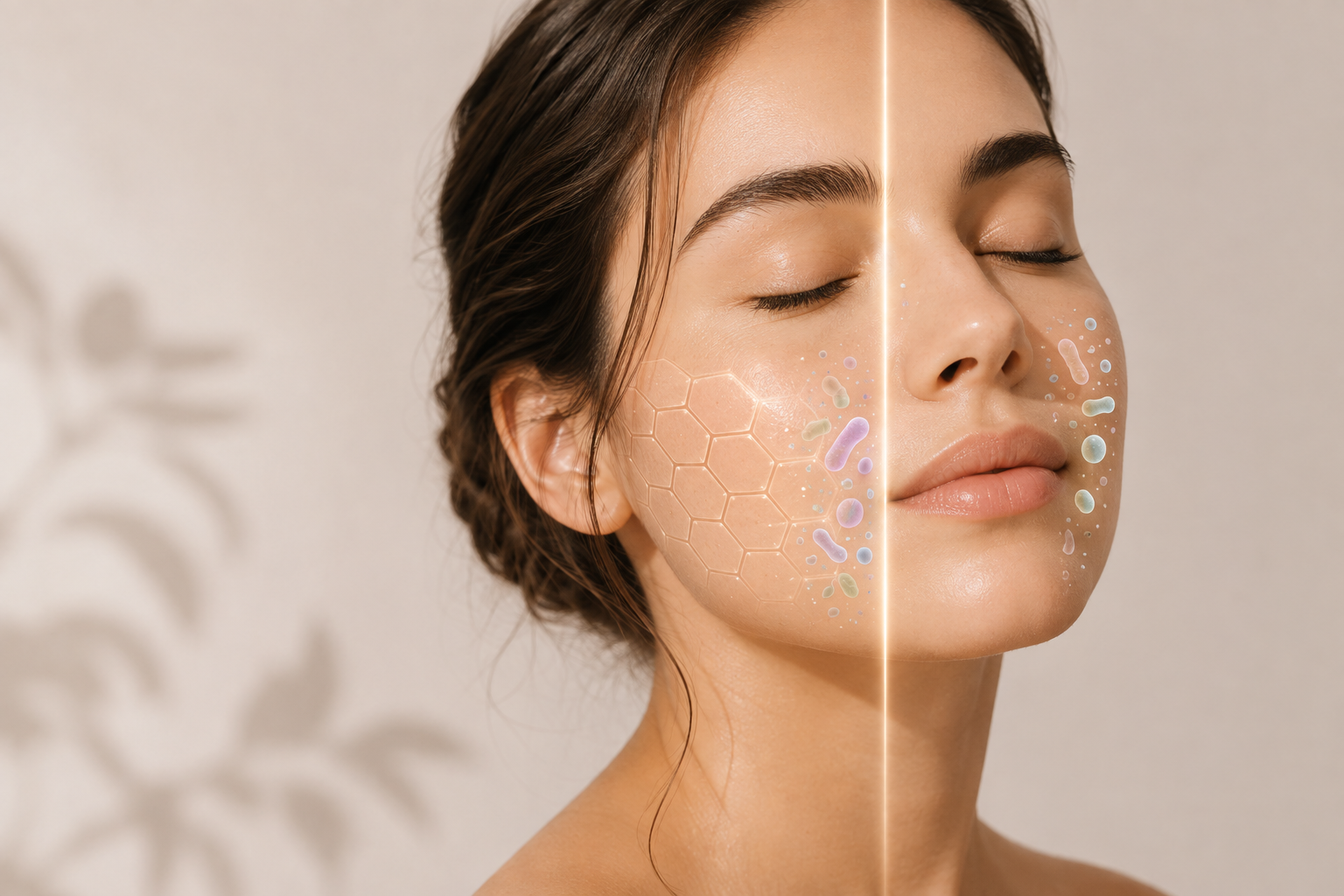
"Barrier" and "microbiome" have both become buzzwords in skincare content, and increasingly they get used interchangeably — as if damaging one automatically means damaging the other, or as if fixing one automatically fixes the other. They're related, but they're genuinely different systems, and understanding the distinction changes how you actually approach skin problems that don't respond to the usual advice.
What the Skin Barrier Actually Is
The skin barrier, technically the stratum corneum, is the physical, structural outer layer of skin — made up of skin cells held together by lipids (ceramides, cholesterol, fatty acids) in what's often described as a "brick and mortar" structure. Its job is mechanical: keep moisture in, keep irritants, allergens, and pathogens out. When this structure is compromised — through over-exfoliation, harsh products, or environmental stress — you get the classic signs covered in our piece on barrier repair versus slugging: sensitivity, redness, tightness, and increased reactivity to products that used to feel fine.
What the Skin Microbiome Actually Is
The skin microbiome is an entirely different system — the community of bacteria, fungi, and other microorganisms living on the skin's surface. Far from being something to eliminate, a healthy, diverse microbiome plays an active protective role: beneficial bacteria compete with harmful pathogens for space and resources, help regulate skin pH, and even contribute to immune function at the skin's surface. An imbalanced microbiome — where harmful bacteria outcompete beneficial ones — is increasingly linked to conditions like acne, eczema, and rosacea flare-ups.
Why the Two Get Confused
The confusion happens because barrier damage and microbiome imbalance often occur together and can look similar from the outside — both can show up as redness, sensitivity, and breakouts. But the mechanisms are different: barrier damage is a structural, physical problem (the "wall" is compromised), while microbiome imbalance is a biological, ecosystem problem (the "residents" of that wall are out of balance). A product that repairs the physical barrier doesn't automatically rebalance the microbiome, and vice versa — which is exactly why some routines fix redness and tightness but breakouts persist, or fix breakouts but sensitivity remains.
How They Actually Affect Each Other
That said, the two systems aren't independent — a damaged barrier changes the skin surface environment (pH, moisture, lipid composition) in ways that can favour harmful bacteria over beneficial ones, disrupting the microbiome as a downstream consequence of the structural damage. Similarly, a genuinely imbalanced microbiome, particularly overgrowth of acne-causing bacteria, can trigger inflammation that weakens barrier function over time. They influence each other, but neither one automatically fixes the other on its own.
How to Support Both, Not Just One
For Barrier Health
Focus on ceramide-rich, barrier-supportive moisturisers, gentle non-stripping cleansers, and reducing harsh actives during periods of active sensitivity. This is the physical, structural side — rebuilding the wall itself.
For Microbiome Balance
Avoid over-cleansing and harsh antibacterial products that indiscriminately kill both harmful and beneficial bacteria — this is a common mistake with aggressive anti-acne routines that treat all bacteria as the enemy, when the goal should be rebalancing rather than sterilising. A gentle, pH-balanced anti-acne cleanser formulated to target problem bacteria without stripping the skin entirely is a more sustainable approach than harsh, broad-spectrum antibacterial washes that disrupt the whole ecosystem.
Avoiding excessive alcohol-based products and maintaining skin's natural pH (skin is naturally slightly acidic, and many harsh cleansers push it too alkaline, which favours harmful bacteria over beneficial ones) also supports a healthier microbiome over time.
Where Regenerative Ingredients Fit
Ingredients like PDRN, covered in more depth in our deep dive on PDRN, primarily support barrier structure and cellular repair rather than directly targeting the microbiome — but a healthier, more intact barrier does create a more stable environment for a balanced microbiome to establish itself, which is part of why regenerative skincare and microbiome health tend to improve together even though they're addressing different mechanisms.
The Bottom Line
Barrier and microbiome aren't the same system wearing two different names — one is structural, one is biological, and they influence each other without being interchangeable. If your skin is reactive, sensitive, or breaking out despite a seemingly solid routine, it's worth considering which system is actually the problem, since a barrier-repair-focused routine and a microbiome-focused routine aren't the same fix, even though the surface symptoms can look remarkably similar.


