
Cart
0
Can You Use PDRN and Salicylic Acid Together?
Yes, most people can use PDRN and Salicylic Acid together. They do different jobs, so they don't cancel each other out:
- Salicylic Acid (BHA) is an oil-soluble exfoliant. It works inside oily pores to help clear excess oil, dead skin and congestion behind blackheads and pimples.
- PDRN is a skin-conditioning ingredient. It supports hydration and a smoother, healthier-looking skin surface.
In simple terms, Salicylic Acid clears and PDRN comforts. That is why the two are often paired for oily, acne-prone skin that also feels dry or irritated from acne treatments.
How to Layer PDRN and Salicylic Acid
The general rule is to apply the thinnest texture first and give an exfoliating acid a minute to settle.
If they are in separate products
- Cleanse and pat skin dry.
- Apply the Salicylic Acid product (toner or serum).
- Wait about 1–2 minutes.
- Apply the PDRN serum or cream.
- Finish with moisturiser if needed.
- In the morning, always finish with SPF 50 sunscreen.
If they are in one product
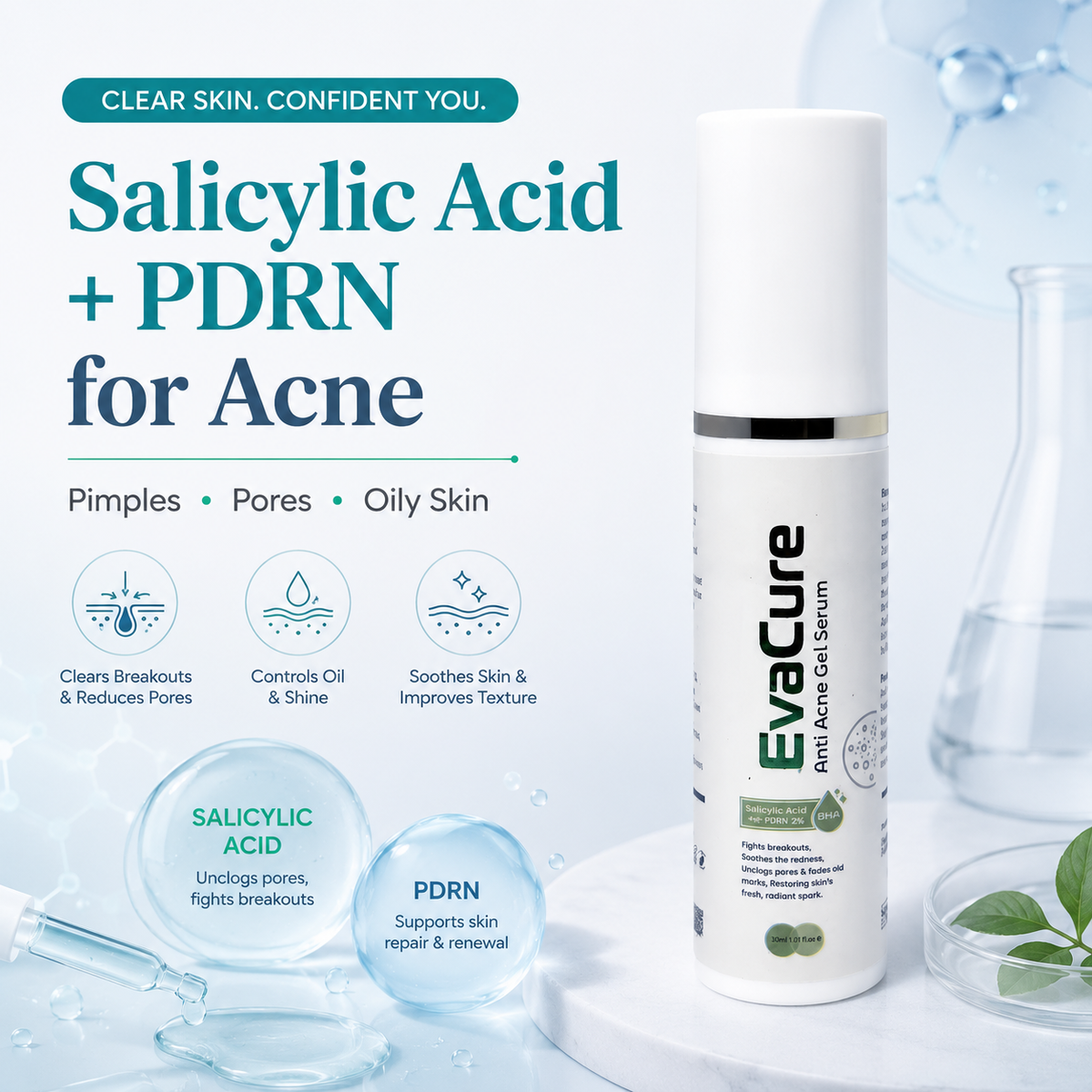
A combined formula removes the guesswork. EvaCure Salicylic Acid + PDRN Gel Serum contains both, so you apply one layer after cleansing and follow with moisturiser and sunscreen.
AM or PM? How Often Should You Use Them?
- Starting out: use Salicylic Acid 3–4 evenings a week, then increase to daily if your skin is comfortable.
- PDRN: can usually be used once or twice daily, since it is a conditioning ingredient rather than an exfoliant.
- Morning use: fine for both, as long as you use sunscreen. Exfoliated skin is more sensitive to the sun.
When to Be Careful
- Other strong actives: avoid using Salicylic Acid in the same routine as retinol, glycolic acid or benzoyl peroxide until you know how your skin reacts. Alternate nights instead.
- Stinging, peeling or redness: reduce how often you use Salicylic Acid and keep PDRN plus moisturiser for comfort.
- Very dry or sensitive skin: start with a small area and use less often.
- Pregnancy or prescription acne treatment: check with your doctor or dermatologist first.
Is PDRN Good for Oily, Acne-Prone Skin?
PDRN is not an oil-control or acne-clearing ingredient on its own, but it can suit oily, acne-prone skin well:
- Lightweight hydration: oily skin can still be dehydrated, especially when using acne treatments.
- Post-breakout support: helps care for skin that looks rough or uneven after breakouts.
- Balance: makes an acne routine feel less harsh, which helps you stay consistent.
For the best results on oily skin, choose a gel or water-based PDRN texture rather than a heavy cream.
A Simple Routine for Oily, Acne-Prone Skin
Morning: gentle acne cleanser → Salicylic Acid + PDRN serum → light moisturiser → SPF 50 sunscreen.
Night: gentle acne cleanser → Salicylic Acid + PDRN serum → moisturiser.
For the cleansing step, see our guide to the EvaClaris Cica Exosome anti-acne face wash. For sun protection that won't feel heavy, read sunblock for acne-prone and oily skin.
Frequently Asked Questions
Should I apply PDRN before or after Salicylic Acid?
After. Apply Salicylic Acid first on clean skin, wait 1–2 minutes, then apply PDRN.
Can PDRN cause breakouts?
PDRN itself is not known as a pore-clogging ingredient, but the rest of the formula matters. Oily skin usually does better with gel textures.
Can I use PDRN with Salicylic Acid every day?
Many people can, once their skin is used to Salicylic Acid. Start a few times a week and build up.
Do I need sunscreen when using Salicylic Acid?
Yes. Use broad-spectrum SPF 50 every morning when using exfoliating acids.
Is there a product with both PDRN and Salicylic Acid?
Yes. EvaCure combines Salicylic Acid and PDRN in one lightweight gel serum for oily, acne-prone skin.
Cosmetic skincare information only. Persistent, painful or cystic acne should be assessed by a qualified dermatologist.
Build the complete acne routine: Pair a leave-on acne serum with a gentle cleanser. See our EvaClaris anti-acne face wash guide for the cleansing step.


