
Cart
0
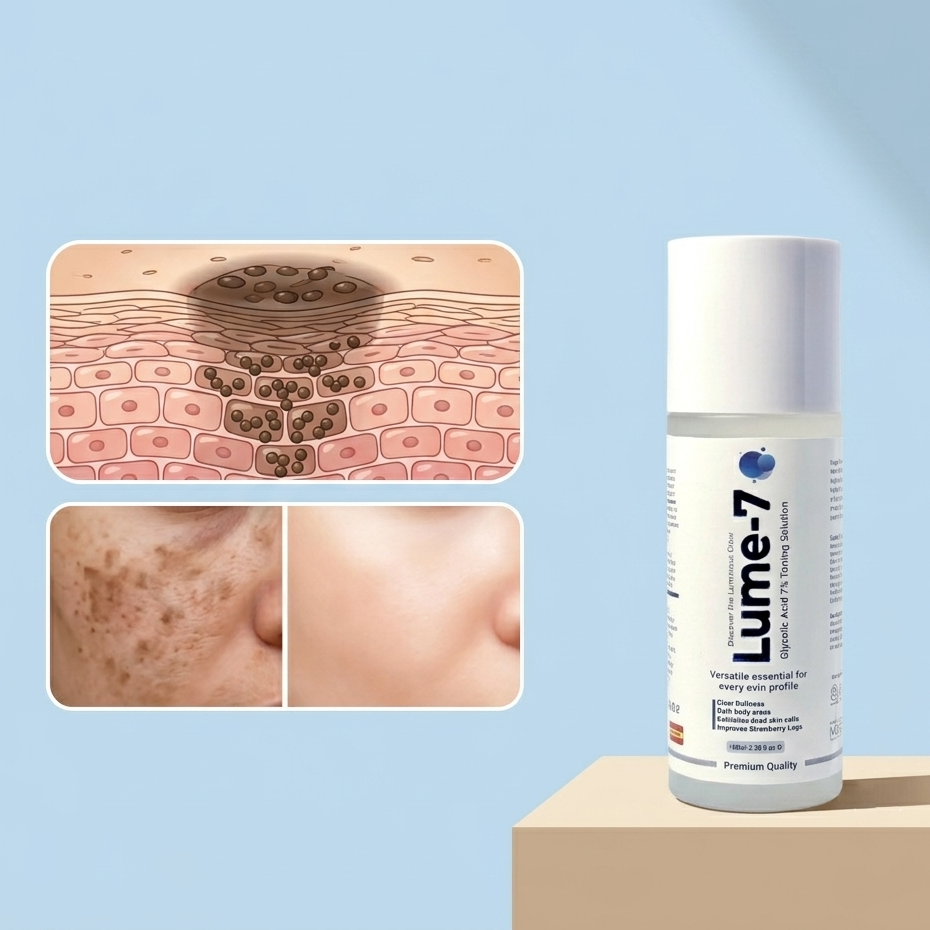
Quick answer: Glycolic acid can help a dark neck, dark underarms and dark spots look lighter and smoother over time, when the darkness comes from dead-skin buildup, friction or post-acne marks. It does this by exfoliating the dull top layer of skin. It does not bleach skin, and results take several weeks of regular use plus sunscreen.
How Glycolic Acid Works on Dark Skin Areas
Glycolic acid is an alpha hydroxy acid (AHA). It loosens the bonds between dead surface cells so they shed more evenly. On areas that look darker because of buildup, rubbing or old marks, this can gradually reveal smoother, more even-looking skin.
A 7% glycolic acid toner is a practical strength for home use on the face and body: strong enough to exfoliate, but gentle enough to introduce slowly.
Glycolic Acid for a Dark Neck
A dark neck is often caused by sweat, friction from collars and jewellery, sun exposure and buildup of dead skin. Glycolic acid can help with the buildup and uneven tone.
- Wash and fully dry the neck at night.
- Sweep a cotton pad with a small amount of toner over the darker area. Avoid the area under the jaw if it's easily irritated.
- Start 2 nights a week, then build to 3–4 nights if comfortable.
- Moisturise, and use sunscreen on the neck in the morning.
Glycolic Acid for Dark Underarms
Underarm darkness is commonly linked to shaving, waxing, friction and deodorant irritation.
- Use at night on clean, completely dry underarms.
- Never apply straight after shaving or waxing. Wait at least 24–48 hours.
- Start 1–2 nights a week. Skip deodorant that night if you feel stinging.
- Stop if you get burning, redness or peeling.
Glycolic Acid for Dark Spots and Post-Acne Marks
On the face, glycolic acid helps flat brown or grey post-acne marks and sun spots fade faster by speeding up surface renewal. Use it at night and always wear SPF 50 in the day, otherwise new sun exposure can darken the spots again. Read more in our guide to glycolic acid for acne marks and texture.
Facial patches that look like melasma? Melasma usually needs a gentler, pigment-focused approach than exfoliation alone. A tranexamic acid melasma serum such as Evamelas, plus daily SPF, is a better fit. Learn the difference in our melasma vs dark spots guide.
Knees, Elbows and Body
Rough, darker-looking knees and elbows usually respond well to regular exfoliation. The same 7% toner can be used 2–3 nights a week, followed by a rich moisturiser. For very dry, rough body skin, a urea lotion like EvaSoft Urea 10% pairs well on alternate nights.
How Long Does Glycolic Acid Take to Work?
- 2–4 weeks: skin feels smoother and looks less dull.
- 6–12 weeks: dark areas and marks start to look more even.
Results depend on the cause of the darkness, how often you use it and how well you protect the skin from the sun.
What to Avoid
- Using it on freshly shaved, waxed, broken or irritated skin.
- Layering it with retinol, scrubs or other acids on the same night.
- Using it on intimate areas or the eye area.
- Skipping sunscreen on the face and neck.
When to See a Doctor
If a dark neck or underarms feel thick or velvety, appear suddenly or keep spreading, see a doctor. This can be a sign of acanthosis nigricans, which is linked to insulin resistance and needs medical assessment, not only skincare.
A 7% Glycolic Acid Toner for Face and Body
Lume-7 Glycolic Acid 7% Toner is a 100 ml face and body toner that combines 7% glycolic acid with niacinamide, aloe vera and amino acids for comfort. It is designed for gradual use on the face, neck, underarms, knees and elbows. New to AHAs? Start with our glycolic acid toner beginner guide.
Frequently Asked Questions
Can glycolic acid remove a dark neck?
It can make a dark neck look lighter and more even when the cause is buildup, friction or sun exposure. It won't change your natural skin colour, and a thick, velvety dark neck needs a doctor's check.
Is glycolic acid good for dark spots?
Yes, for flat dark spots and post-acne marks. It speeds up surface renewal so marks fade more quickly, as long as you use daily sunscreen.
How do I use glycolic acid for dark underarms?
Apply a small amount at night on clean, dry underarms, 1–2 times a week to start. Never use it right after shaving or waxing.
Which is better for dark spots: glycolic acid or tranexamic acid?
Glycolic acid is better for texture, buildup and post-acne marks. Tranexamic acid is better for melasma and stubborn facial pigmentation. Some people use tranexamic acid in the morning and glycolic acid at night.
Can I use glycolic acid every day?
Most people should not start daily. Begin 1–2 nights a week and increase only if your skin stays comfortable.
Cosmetic skincare information only. Results vary. Stop use if persistent irritation occurs.
Pigmentation topic hub: For melasma, dark spots, Tranexamic Acid, PDRN and SPF, visit our Melasma & Pigmentation Guide.


