
Cart
0
Tranexamic Acid for Skin Whitening & Brightening: What You Need to Know Before You Start
If you are researching tranexamic acid for melasma, dark spots or uneven skin tone, the most useful approach is a consistent pigmentation-focused routine rather than aggressive bleaching or over-exfoliation.
Tranexamic Acid is used in topical skincare formulas designed to improve the appearance of uneven pigmentation and stubborn dark spots. It is often paired with supportive ingredients to create a more balanced routine.
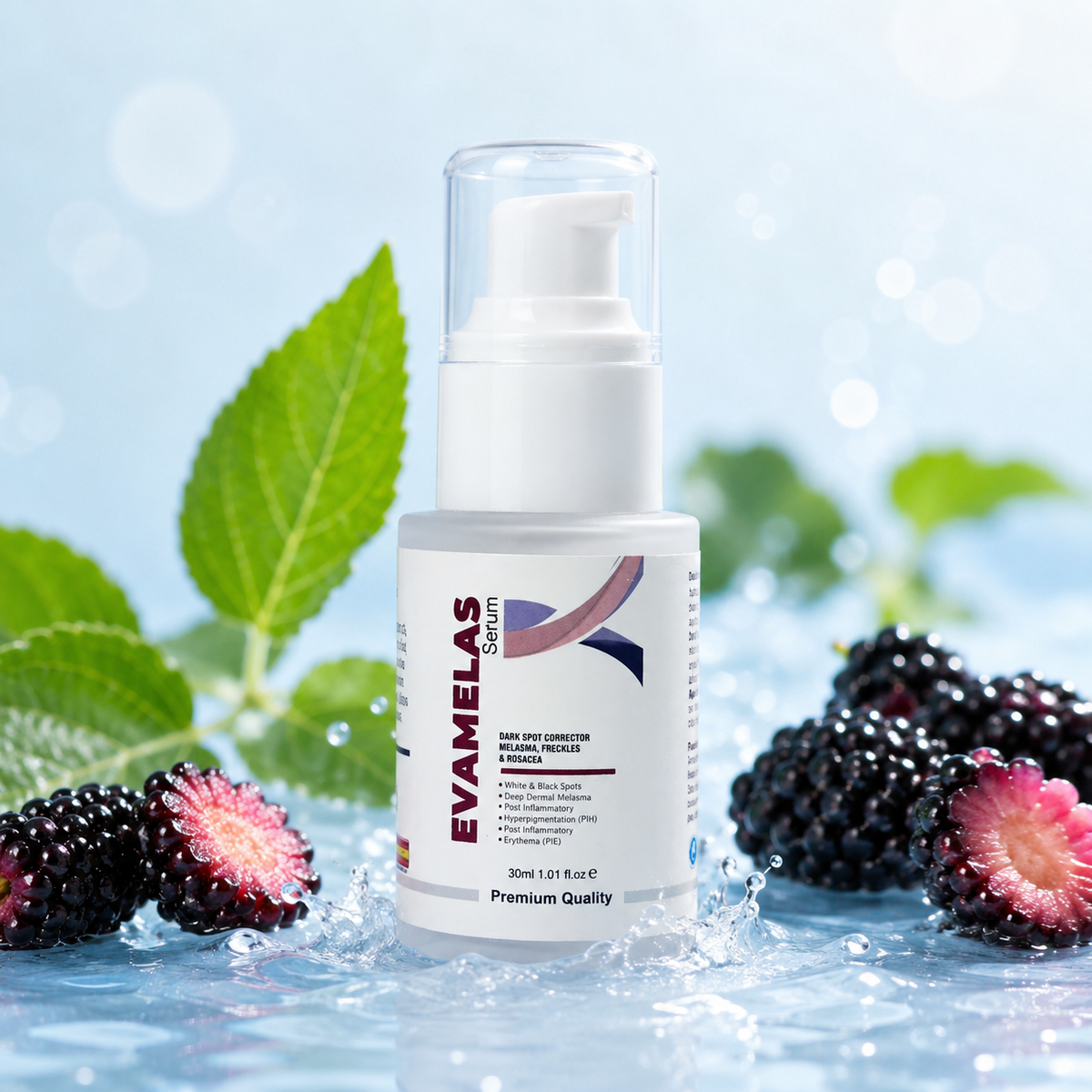
For a targeted TranX + PDRN option, explore EvaMelas Anti-Melasma Serum with Tranexamic Acid + PDRN.
Routine Tip: Apply according to the product directions and use broad-spectrum sunscreen during the day, since ongoing sun exposure can worsen the appearance of pigmentation.
For people searching for tranexamic acid for skin brightening, melasma serum, dark spot serum or pigmentation serum in Pakistan, choose a targeted formula and give the routine time to work. Visible improvement varies by skin type, pigmentation depth and sun exposure.
Is tranexamic acid good for skin whitening?
Many people in Pakistan search for "tranexamic acid for skin whitening", but it is important to know what the ingredient actually does. Topical tranexamic acid does not bleach the skin or change your natural skin colour. Instead, it is used to target excess, uneven pigment — such as melasma patches, dark spots and post-acne marks — so the overall complexion looks brighter and more even.
In other words, the realistic goal is even-toned, brighter-looking skin, not a lighter skin colour. Products that promise rapid "whitening" often rely on harsh bleaching agents, which can irritate the skin and make pigmentation worse over time.
Best tranexamic acid serum in Pakistan: what to look for
When comparing a tranexamic acid serum in Pakistan for brightening and uneven tone, look for:
- Tranexamic Acid (TXA) as a highlighted active, not just a trace ingredient.
- Supporting brightening ingredients such as Niacinamide, so the routine addresses more than one pigmentation trigger.
- Skin-conditioning support such as PDRN or Hyaluronic Acid, which helps keep pigmentation-prone skin comfortable.
- A leave-on serum format, since rinse-off products have limited contact time with the skin.
Our pick: Evamelas Tranexamic Acid + PDRN Serum combines TranX (TXA), PDRN, Niacinamide and Darkout in a Liposome–Ethosome carrier system for the visible appearance of melasma, dark spots and uneven skin tone. See the current Evamelas price in Pakistan on the product page.
Tranexamic acid vs other brightening ingredients
- Tranexamic acid: focused on stubborn, uneven pigmentation such as melasma and dark patches.
- Niacinamide: supports the skin barrier and helps improve the look of uneven tone and pores.
- Alpha-arbutin: a gentle brightening ingredient often used for dark spots.
- Vitamin C: an antioxidant used for overall radiance and dullness.
These ingredients are often combined, because pigmentation usually has more than one trigger.
How to use tranexamic acid for dark spots and brightening
- Cleanse and gently dry the skin.
- Apply your tranexamic acid serum to the whole face or to areas of uneven tone, as directed.
- Follow with moisturiser.
- In the morning, finish with a broad-spectrum sunscreen such as EvaShade SPF 50+, and reapply when outdoors.
Patch test first, and introduce one new active at a time so you can see how your skin responds.
Can I use tranexamic acid with PDRN?
Yes. Tranexamic acid and PDRN are commonly used together: tranexamic acid targets the look of pigmentation, while PDRN supports overall skin condition. Read our TranX + PDRN melasma and dark spots guide for more detail.
How long does tranexamic acid take to work?
Pigmentation fades gradually. Most routines need several weeks of consistent daily use, together with sun protection, before changes become noticeable. Deeper melasma may take longer, and results vary from person to person.
Cosmetic skincare information only. For persistent or sudden pigmentation changes, consult a dermatologist.
Melasma-specific guidance: If your main concern is melasma or persistent dark patches, read our Tranexamic Acid + PDRN melasma guide.
Pigmentation hub: For melasma, dark spots, sunscreen and related routines, visit our Melasma & Pigmentation Guide.


