
Cart
0
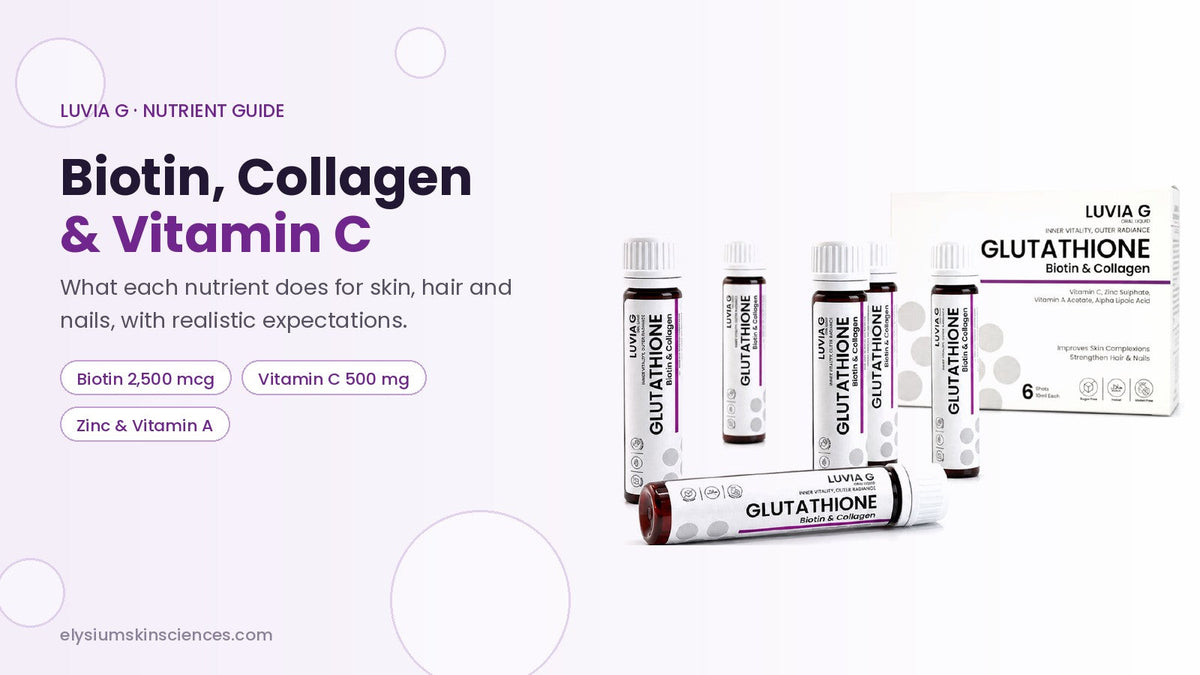
Quick answer: Biotin, collagen, vitamin C and zinc have different nutritional roles. A supplement can add these ingredients to a routine, but it cannot guarantee clearer skin, faster hair growth, stronger nails or a change in natural skin colour. The evidence depends on the nutrient, the amount, and whether a person has a deficiency or another health concern.
Beauty supplements are often marketed for “skin, hair and nails” as if those outcomes were interchangeable. They are not. Understanding what each ingredient is known for helps people compare a biotin and collagen supplement or an oral beauty shot without mistaking a nutrient claim for a medical treatment.
Biotin: a nutrient, not a universal hair-loss remedy
Biotin is a B vitamin that helps the body process fats, carbohydrates and proteins. Biotin deficiency is uncommon, and evidence that extra biotin improves hair, skin or nails in people who are not deficient is limited. Hair shedding can have many causes, so persistent or sudden hair loss deserves assessment rather than self-treatment with a beauty supplement.
High supplemental biotin can interfere with certain laboratory tests, including some hormone tests. Tell your clinician and laboratory if you take biotin before having blood work. The NIH Office of Dietary Supplements explains this issue in its Biotin Fact Sheet.
Collagen: study results depend on the product and dose
Oral collagen has been studied for outcomes such as skin hydration and elasticity. A 2023 review of randomized trials reported potential benefits but also identified limitations and the need for more large-scale research. The studies used particular collagen forms, amounts and time periods; their findings do not prove that every product or dose will produce the same effect.
Check the label for the collagen amount per serving and any details about its form or source. Do not assume a product's collagen amount is equivalent to amounts used in a clinical study. You can read the systematic review and meta-analysis on oral collagen and skin outcomes.
Vitamin C and zinc: useful roles, realistic expectations
Vitamin C contributes to normal collagen formation and supports normal body functions. That does not mean taking more vitamin C will automatically make skin brighter or reverse skin ageing. Zinc and vitamin A also have recognised roles in maintaining normal skin, but supplements should not replace a balanced diet or medical care.
For nutrient reference information, see the NIH Office of Dietary Supplements fact sheets on Vitamin C and Zinc.
What to check in an oral beauty supplement
- Read the serving size first: confirm whether amounts are per vial, per multiple-vial serving or per day.
- Look for the amount of each ingredient, not only a list of ingredient names.
- Follow the route and daily directions printed on the packaging.
- Ask a healthcare professional about interactions, pregnancy, breastfeeding or ongoing health conditions.
- Be cautious of promises to cure hair loss, treat pigmentation or permanently alter skin colour.
How LUVIA G fits the label
LUVIA G is a 10 ml oral shot. Its current product ingredient panel lists glutathione 500 mg, vitamin C 500 mg, collagen 334 mg, biotin 2,500 mcg, zinc sulphate 10 mg, vitamin A acetate 1,000 IU and alpha lipoic acid 100 mg per 10 ml shot. These are product-label details; they are not proof that the product treats a deficiency or guarantees a visible result.
Use supplements as directed and keep a balanced diet and appropriate skincare or haircare routine. Consult a qualified healthcare professional if a skin, hair or nail concern is persistent, worsening or accompanied by other symptoms.
Frequently asked questions
Does biotin make hair grow faster?
Biotin supports normal body functions, but extra biotin is not a proven universal hair-growth treatment. Hair loss may have causes that need diagnosis.
Does collagen improve skin?
Some trials of specific oral collagen products report changes in skin hydration or elasticity, but the evidence does not establish that every collagen product or serving will have the same effect.
Can vitamin C supplements whiten skin?
Vitamin C has a role in normal collagen formation. This nutritional role is not a promise of skin whitening or treatment for pigmentation.
Should I tell my doctor about biotin?
Yes. Biotin can interfere with some lab tests. Tell your healthcare professional and laboratory about any supplement you take before testing.
Related guides: LUVIA G oral shots, the LUVIA G skin, hair and nails guide, and how to read a glutathione shot label.
Sources and further reading
- NIH ODS Biotin Fact Sheet
- NIH ODS Vitamin C Fact Sheet
- NIH ODS Zinc Fact Sheet
- Systematic review of oral collagen and skin outcomes
This article is for general information and does not diagnose, treat or prevent a medical condition. Consult a healthcare professional for individual advice.


